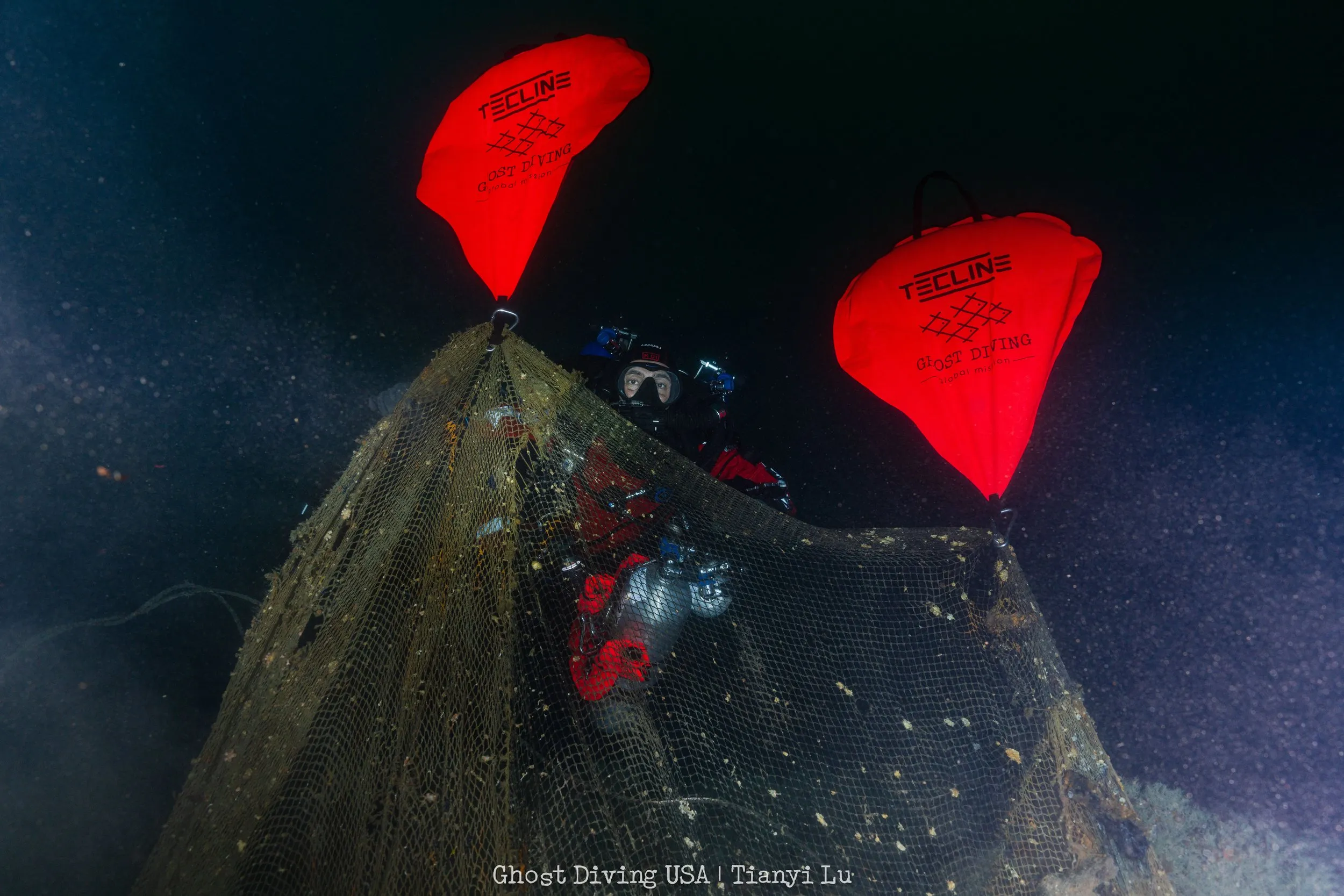
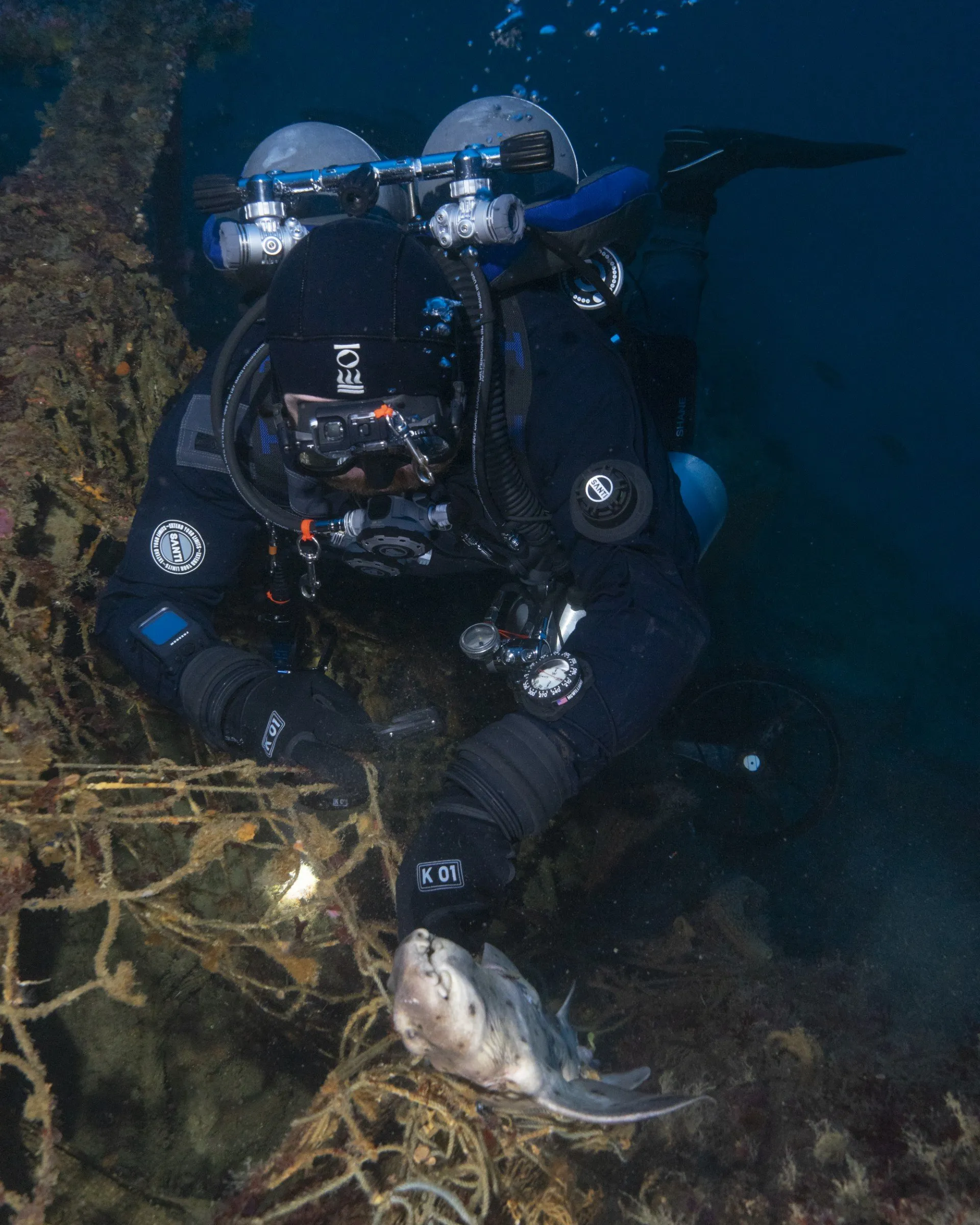
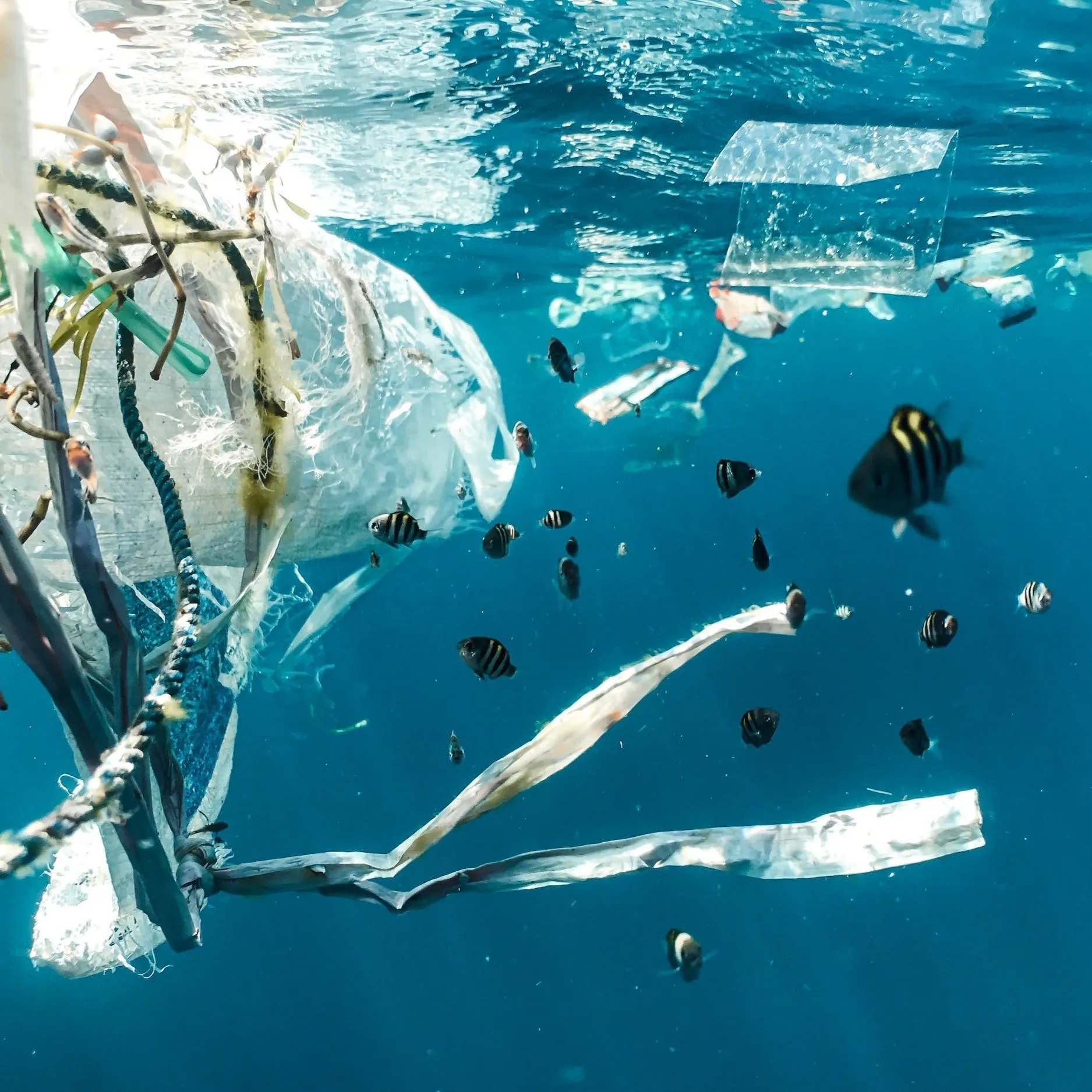
Ghost nets don't only catch fish; they also entangle sea turtles, dolphins and porpoises, birds, sharks, seals, and more.
Our mission is to use our unique abilities as divers to document and recover abandoned fishing gear from sensitive aquatic environments. Through our partnerships, we strive to recycle and repurpose recovered fishing nets into sustainable products.
The problem
What is ghost fishing?
Ghost fishing is a common term that describes what happens when derelict fishing gear 'continues to fish', another term used is abandoned, lost, or otherwise discarded fishing gear (ALDFG). Once lost at sea, these ghost nets trap, kill, or otherwise disrupt sensitive marine ecosystems while contributing microplastics into the water for years to come.
Where it goes
Where does ghost gear go?
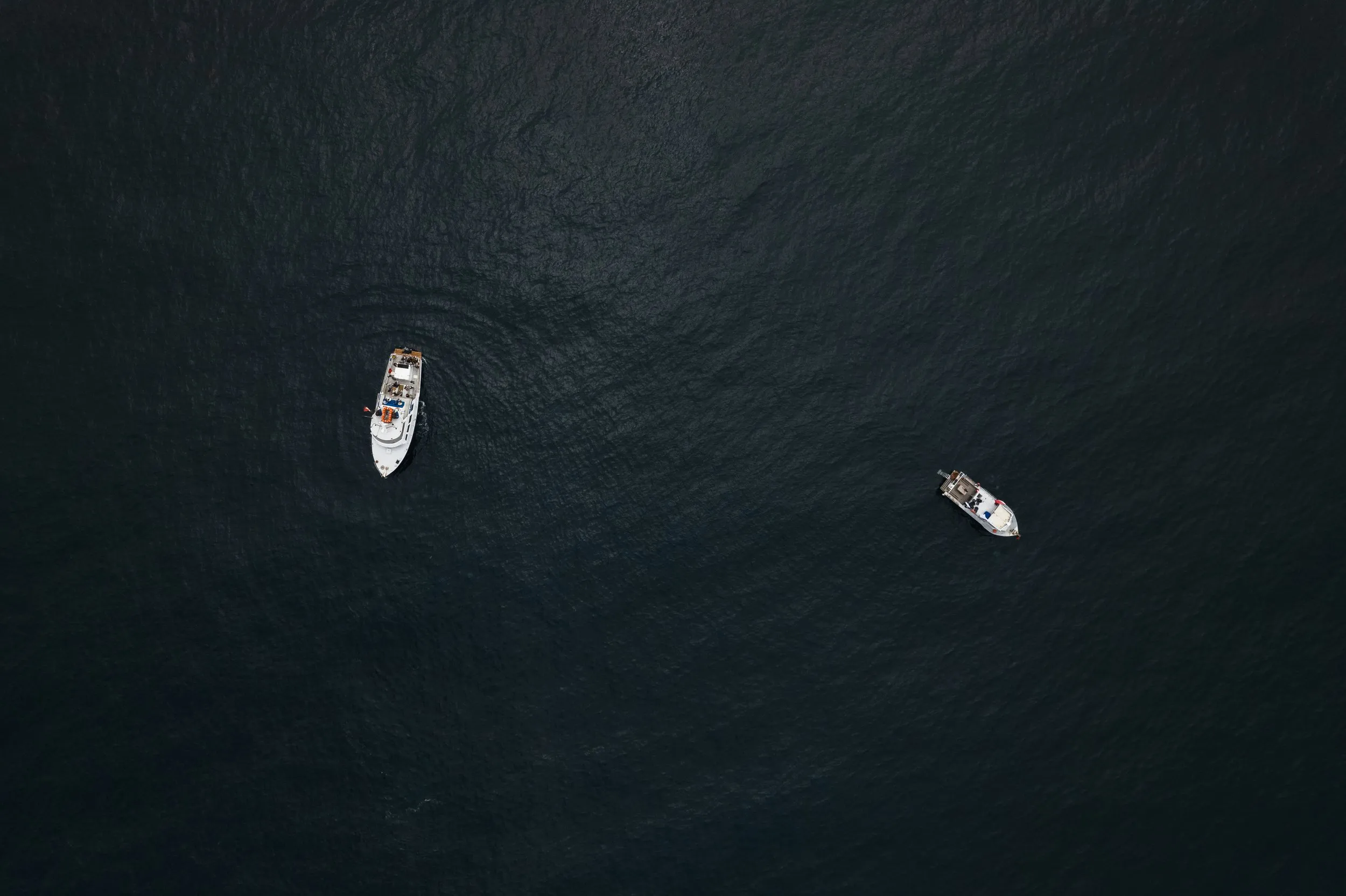
Once retrieved by our dive team abandoned fishing gear is recycled by one of our partner organizations. Through our affiliation with Healthy Seas, we are able to source processing facilities and companies looking to use recycled or upcycled materials in their products. For example our partner Aquafil processes and recycles nylon fishing nets into Econyl® to be used in everything from outdoor apparel to socks, swimwear, carpets, and more!
- 30–50%
- of all plastic waste in the oceans is ghost nets
- 46%
- of the Great Pacific Garbage Patch consists of abandoned fishing equipment
Our partners




Seen a net, trap or line underwater?
Our best tool to locate new targets for our dive team is reports from divers and fishermen.
Stay in the loop
Mission updates in your inbox
Dive reports, upcoming missions and ways to help. A few emails a year, never spam.